Thursday, April 14, 2011

Oscar Hammerstein


In this engrossing profile of the lyricist by his nephew, there are so many telling details and anecdotes, that picking just one was really difficult.

'It could take him a week to write a single lyric—a couple of hundred words at most—as he carefully considered each word and image. In “Oh, What a Beautiful Mornin’!” for instance, he originally wrote “The corn is as high as a cow pony’s eye,” a simile that fitted easily into the Oklahoma landscape. But he then walked over to his Doylestown neighbor’s cornfield and saw that the corn was much taller than that... More important, he didn’t like how “cow pony” sounded to the ear, thinking it would be difficult for the first-time listener to grasp when sung, one of the many constraints on lyric-writing—perhaps the most difficult or at least confining of all literary forms. So he changed it to “elephant’s eye.”

'When he was finished with a lyric, he would turn the yellow-pad pages over to my mother to be typed. But before he decided he was finished, Oscar would read the lyric out loud to his wife Dorothy, a practice she called “trying it out on the dog.” Then a copy was sent by messenger to Rodgers so he could set it to music, which Rodgers usually did in minutes, not days, much to Oscar’s feigned annoyance.' More...

Ads in books


The announcement that a cheaper Kindle will be subsidized by advertising brings up the issue of the history of ads in books. The MobyLives blog sorts it out, and we won't repeat them here (they reference a couple of other pieces). But I have to say I remember these paperback book ads well, and I remember fighting against them in my earliest days in publishing (long before I joined Reader's Digest). Not surprisingly, I was against them. Ads on a Kindle? I don't know. We're so used to ad-supported software these days, at least software that is otherwise "free." Maybe it's not so bad? It's a tough, tough call.

Wednesday, April 13, 2011

Broadway auctions


Some of this may sound weird, but the money-making efforts of the stars of the season go to a worthy cause, Broadway Cares / Equity Fights AIDS. What happens is that stars are offering tours, props, and even the clothes off their back. 'The higher-profile the celebrity, the more an item will sell for. During the run of “Equus,” Mr. [Daniel] Radcliffe auctioned off a pair of jeans he wore in the show for thousands of dollars. “The most famous was when Hugh Jackman and Daniel Craig auctioned their T-shirts from the stage,” during the run of “A Steady Rain,” said Mr. Viola {BC executive director]. “They raised hundreds of thousands of dollars.” ' More...

Civil War books


We saw a lot of mentions across the web of the anniversary of the firing on Fort Sumter 150 years ago today. Ken Burns's TV documentary is probably hands down everyone's top choice for the most engaging approach overall. But as far as books are concerned, Amazon's Omnivoracious provides a very nice list of favorites, while providing some staggering statistics. 'According to biographer Edward Ball, "something like 65,000 books have been published on the war, more than one a day since it ended." (On Amazon, you can find over 15,000 history books on the subject alone).' More...

Happy Anniversary to Gone With the Wind


Margaret Mitchell published the novel in 1936, so the big 75th anniversary is coming up. And there will be celebrations, especially among the "Windies" like Selina Faye Sorrow. 'It started with the Scarlett O’Hara Barbie doll that Mrs. Sorrow’s husband gave her 18 years ago. Now, she has more than 500 items worth thousands of dollars. Twin Rhett Butler-Scarlett O’Hara pillows adorn the couple’s king-size bed. She has a replica of Clark Gable’s driver’s license, G.W.T.W. wine and water bottles and rare engraved invitations to Margaret Mitchell’s funeral, which were delivered after the novel’s author was killed, at age 48, by a reckless driver in 1949.' More...

Switching roles in Frankenstein


In the London production of Frankenstein, two actors—Jonny Lee Miller and Benedict Cumberbatch—alternate in the roles of the monster and his creator. The reviews have been spectacular, but what is it like to do this switch with every performance? The actors explain in an interview. 'There are these two great scenes that you have together that are always fantastic to play, which ever way round you play them, so it's not a competition for us, in either of the parts. It’s a fascinating question of support and encouragements. Being there, it’s nice to have it both ways around, and not get too exhausted or bogged down by one or the other parts. You get to see the play inside-out, really.' More...

Banned books


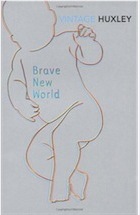
I don't think many publishers are in favor of banning books. On the other hand, we would want books to be appropriate for younger readers, and for parents to have knowledge of what their kids are reading. Nowadays so many books for young people address the problems of the times, which are pretty hard to avoid not only in books but everywhere else, real or imagined. In any case, the American Library Association's list of the books Americans tried hardest to ban last year raises all sorts of questions that one must answer for oneself. 'Huxley's vision of a totalitarian future comes third on American Library Association's list of 2010's 'most challenged' books. Banned in Ireland when it first appeared in 1932, and removed from shelves and objected to ever since, Aldous Huxley's Brave New World is still making waves today. The novel of a dystopian future was one of the most complained about books in America last year, with readers protesting over its sexually explicit scenes, "offensive" language and "insensitivity".' More...