
A lot of people in the US have just finished watching "American Idol." In fact, the show had a big bump in the ratings this year. I've seen numbers like 20 million a night. Which is chickenfeed, when you compare it to the hundreds of millions watching Eurovision Song Contest. And if you've never seen any Eurovision, you don't know what you're missing (although in some cases you are also extremely lucky).
The way it works is that every member country of the European Broadcasting Union submits a song, on which the other countries vote. Abba won for Sweden in '74, and Celine Dion won for Switzerland in '88 (which means that either Canada is in Switzerland or else one need not be from the submitting country), and the nature of the songs is that sort of mainstream pop (with a lot of them in English). The Irish entry below is fairly typical:
One of my favorites this year is from Moldova. Well, I like their hats, anyhow. Like a lot of the official videos, this one opens with a little travelogue:
I honestly do like this one from Italy. Rather catchy:
And the winner is Azerbaijan. They're not bad at all, but I think they'd be better in Moldavian hats.
Showing posts with label music. Show all posts
Showing posts with label music. Show all posts
Monday, May 30, 2011


Sunday, May 29, 2011
A good look at the music industry
We hear this all the time: the poor music industry is being put out of business by all those pirates out there stealing music. When the music industry went to court to sue the Limewire music sharing site, the figure they cited for the money owed to them was in the neighborhood of 75 trillion dollars. Trillion dollars. They were laughed out of court, but that has hardly stopped them from complaining and defending their position. An article on The Quietus by Wyndham Wallace talks about a different side of the changing music economy, and how it affects those affected the most: the musicians.
"Touring's where the money is, the mantra goes, and that's the best way to sell merchandise too. But this is a similarly hollow promise. For starters, the sheer volume of artists now touring has saturated the market. Ticket prices have gone through the roof for established acts, while those starting out are competing for shows, splitting audiences spoilt for choice, driving down fees paid by promoters nervous about attendance figures. There's also a finite amount of money that can be spent by most music fans, so if they're coughing up huge wads of cash for stadium acts then that's less money available to spend on developing artists. And for every extra show that a reputable artist takes on in order to make up his losses, that's one show less that a new name might have won."
Read How The Music Industry Is Killing Music And Blaming The Fans
Source: TheQuietus.com
"Touring's where the money is, the mantra goes, and that's the best way to sell merchandise too. But this is a similarly hollow promise. For starters, the sheer volume of artists now touring has saturated the market. Ticket prices have gone through the roof for established acts, while those starting out are competing for shows, splitting audiences spoilt for choice, driving down fees paid by promoters nervous about attendance figures. There's also a finite amount of money that can be spent by most music fans, so if they're coughing up huge wads of cash for stadium acts then that's less money available to spend on developing artists. And for every extra show that a reputable artist takes on in order to make up his losses, that's one show less that a new name might have won."
Read How The Music Industry Is Killing Music And Blaming The Fans
Source: TheQuietus.com
Happy Birthday, Bob Hope
May 29, 1903, was the day Leslie Townes Hope was born in Eltham, England. His family moved to Cleveland about five years later. Young Bob started as a street performer at age 12, eventually branching out into vaudeville, legitimate theater, radio, movies, television, and armed forces venues around the world.
His signature theme song was "Thanks for the Memory." He introduced it in "The Big Broadcast of 1938" as half of a formerly married couple who run into each other and reminisce fondly. It should be seen in its original incarnation as a reminder of what a great song it is. No wonder Hope hung on to it for the rest of his life!
Of course, all those years prior to Hollywood doing whatever the audiences wanted made him more than just an actor. In "The Seven Little Foys," he and another former song-and-dance man get to show their stuff.
There's plenty more to Bob Hope, but perhaps the most important thing he did was his shows for the troops. And perhaps that is what he is best remembered for.
His signature theme song was "Thanks for the Memory." He introduced it in "The Big Broadcast of 1938" as half of a formerly married couple who run into each other and reminisce fondly. It should be seen in its original incarnation as a reminder of what a great song it is. No wonder Hope hung on to it for the rest of his life!
Of course, all those years prior to Hollywood doing whatever the audiences wanted made him more than just an actor. In "The Seven Little Foys," he and another former song-and-dance man get to show their stuff.
There's plenty more to Bob Hope, but perhaps the most important thing he did was his shows for the troops. And perhaps that is what he is best remembered for.
Saturday, May 28, 2011
How to Succeed after Harry Potter
Daniel Radcliffe is on Broadway these days. If you can watch this ensemble clip of "The Brotherhood of Man" without tapping a foot or two, there's something wrong with your feet.
Friday, May 27, 2011
Ringo talks
I can't remember seeing anything like this, an extended interview with Ringo Starr. Cole Moreton of the Mail Online gets to perform the honors, kicking off with Ringo looking at a photo of his young Beatle self and saying, "We didn’t know what was ahead of us. You never do. We didn’t think it would last."
This one's a keeper.
"The career of Richard Starkey, born in 1940, would have been very different if the boy had listened to his family. Having made his first drum kit out of biscuit tins and bits of firewood at the age of 13, he faced a huge decision in the summer of 1960. ‘I was working in a factory, for Henry Hunt and Sons, a light engineering company. I was an apprentice engineer, which was very big news in our family. But I was also playing with Rory and The Hurricanes, and we got the offer of a three-month gig in Butlin’s at Skegness and Pwllheli, so we had to give up our jobs. All my uncles and aunties came over to try and tell me that drumming was OK as a hobby. I had to stand there and defend myself. I said, “No, I’m a drummer, I’m off.” That’s a Sliding Doors moment. Some decisions are good.’ "
Read 'Paul likes to think he's the only remaining Beatle': Ringo Starr on why the world's most famous band was lucky to have him
This one's a keeper.
"The career of Richard Starkey, born in 1940, would have been very different if the boy had listened to his family. Having made his first drum kit out of biscuit tins and bits of firewood at the age of 13, he faced a huge decision in the summer of 1960. ‘I was working in a factory, for Henry Hunt and Sons, a light engineering company. I was an apprentice engineer, which was very big news in our family. But I was also playing with Rory and The Hurricanes, and we got the offer of a three-month gig in Butlin’s at Skegness and Pwllheli, so we had to give up our jobs. All my uncles and aunties came over to try and tell me that drumming was OK as a hobby. I had to stand there and defend myself. I said, “No, I’m a drummer, I’m off.” That’s a Sliding Doors moment. Some decisions are good.’ "
Read 'Paul likes to think he's the only remaining Beatle': Ringo Starr on why the world's most famous band was lucky to have him
Steve Earle live

NPR performs such a great service, giving us performers doing their stuff live, making it available on the internet. I'm a dyed-in-the-wool Steve Earle fan, so I had no trouble putting this one on and blasting it through the office. You can do likewise: go to Steve Earle On World Cafe. Just warn your officemates first.
Tuesday, May 24, 2011
The "American Idol" of opera
It begins with 1200 aspiring opera singers and narrows down to eight finalists performing at a concert at the Metropolitan Opera. Let's face it: becoming a professional opera singer is an unlikely goal. There's only so many opera companies, and you've got to be not just good, but great. You have to bring down cries of bravo from the rafters. You've practically got to become a legend.
This article in the New York Times Magazine tells the story of the national competition, narrowing down all those singers to a select few. There's a great video attached to it. Author Daniel Bergner tells the stories of all the competitors, including the charismatic Ryan Green:
"Ryan Speedo Green stands almost six-foot-five and weighs 300 pounds and wears size 17 shoes, and on a Sunday afternoon in March he was running in place and doing jumping jacks as he waited in the wings of the Metropolitan Opera for his turn to sing. It was the semifinals of the most important operatic voice competition in America, and Ryan was seized by such anxiety that he felt his massive body vanishing. Seventeen of the 22 singers left in the contest had gone before him; to his ears their performances were spectacular. He was fighting off the feeling that he didn’t belong here."
Read Sing for Your Life.
This article in the New York Times Magazine tells the story of the national competition, narrowing down all those singers to a select few. There's a great video attached to it. Author Daniel Bergner tells the stories of all the competitors, including the charismatic Ryan Green:
"Ryan Speedo Green stands almost six-foot-five and weighs 300 pounds and wears size 17 shoes, and on a Sunday afternoon in March he was running in place and doing jumping jacks as he waited in the wings of the Metropolitan Opera for his turn to sing. It was the semifinals of the most important operatic voice competition in America, and Ryan was seized by such anxiety that he felt his massive body vanishing. Seventeen of the 22 singers left in the contest had gone before him; to his ears their performances were spectacular. He was fighting off the feeling that he didn’t belong here."
Read Sing for Your Life.
Dylan
5/24/41 - Bob Dylan is born in Minnesota. Twenty years later he drops out of college and heads for New York. He becomes famous.
Take your pick of celebratory video by period: fairly young, or fairly old, "Tangled Up in Blue" or "Knockin' on Heaven's Door." It's all Dylan.
Take your pick of celebratory video by period: fairly young, or fairly old, "Tangled Up in Blue" or "Knockin' on Heaven's Door." It's all Dylan.
Sunday, May 22, 2011
The Irish dancing world championships
I've seen the occasional Irish dancer, usually during pledge drives on PBS. But this is something different, an amateur competition that is, for some, the end-all be-all. The film Jig captures last year's competition. According to its Facebook page, release information in the US is forthcoming. Claire Black at Living Scotsman explains:
"The real interest is working out what drives dancers, most of whom train every day, building speed and intricate routines, to excel in a sport where there's no prize money and very little attention outside an almost entirely closed community. Add to that the fact that they wear costumes which make them look something like oversized dolls - patterned short dresses, American tan tights, white ankle socks and huge, bouncing, curly wigs (to be fair, male dancers are more modestly attired in patterned waistcoats and ties with black trousers) - and it gets even more compelling. There's more than a touch of My Big Fat Gypsy Wedding about it. 'It's a competition with all that tension," [director Sue] Bourne says. "And they wear funny wigs and funny dresses. It's a world that most of us don't know about and that's always interesting.' "
Read Interview: Sue Bourne - Lady of the dance.
"The real interest is working out what drives dancers, most of whom train every day, building speed and intricate routines, to excel in a sport where there's no prize money and very little attention outside an almost entirely closed community. Add to that the fact that they wear costumes which make them look something like oversized dolls - patterned short dresses, American tan tights, white ankle socks and huge, bouncing, curly wigs (to be fair, male dancers are more modestly attired in patterned waistcoats and ties with black trousers) - and it gets even more compelling. There's more than a touch of My Big Fat Gypsy Wedding about it. 'It's a competition with all that tension," [director Sue] Bourne says. "And they wear funny wigs and funny dresses. It's a world that most of us don't know about and that's always interesting.' "
Read Interview: Sue Bourne - Lady of the dance.
Saturday, May 21, 2011
Lang Lang
He is, perhaps, the most popular classical musician in the world. He has inspired 40 million Chinese children to take piano lessons. On his website you can buy Lang Lang hats, Lang Lang gloves, Lang Lang shirts, Lang Lang sneakers, Lang Lang USB drives and, I think, Lang Lang's piano (although the link is in Chinese except for the words file not found—maybe somebody already bought it). Is he too popular to be good? Shirley Apthorp quotes him in The Australian:
"In the culture of my childhood, being best was everything. It was the goal that drove us, the motivation that gave life meaning. And if, by chance or fate or the blessings of the generous universe, you were a child in whom talent was evident, Number One became your mantra. It became mine. I never begged my parents to take off the pressure. I accepted it; I even enjoyed it. It was a game, this contest among aspiring pianists, and although I may have been shy, I was bold, even at age five, when faced with a field of rivals."
Meet Lang Lang close up in Piano man.
"In the culture of my childhood, being best was everything. It was the goal that drove us, the motivation that gave life meaning. And if, by chance or fate or the blessings of the generous universe, you were a child in whom talent was evident, Number One became your mantra. It became mine. I never begged my parents to take off the pressure. I accepted it; I even enjoyed it. It was a game, this contest among aspiring pianists, and although I may have been shy, I was bold, even at age five, when faced with a field of rivals."
Meet Lang Lang close up in Piano man.
Fats Waller
One never knows, do one....
Thomas Wright Waller was born on May 21, 1904. He was a master of stride piano, with that fantastic left hand never stopping, and the composer of "Ain't Misbehavin'," "Honeysuckle Rose" and a whole slew of others. In addition to his playing, he was an over-the-top performer, mugging continuously and looking like he was having an awful lot of fun. These videos are a little ragged, but this does predate MTV by about fifty years, and they do capture the spirit and the music of the man. Happy Birthday, Fats!
Thomas Wright Waller was born on May 21, 1904. He was a master of stride piano, with that fantastic left hand never stopping, and the composer of "Ain't Misbehavin'," "Honeysuckle Rose" and a whole slew of others. In addition to his playing, he was an over-the-top performer, mugging continuously and looking like he was having an awful lot of fun. These videos are a little ragged, but this does predate MTV by about fifty years, and they do capture the spirit and the music of the man. Happy Birthday, Fats!
Friday, May 20, 2011
k.d. lang
Thank you, KCRW/NPR: An intimate k.d. lang concert, to listen to or watch. Her voice is, in a word, amazing. For the details, go to KCRW Presents: k.d. lang.
Thursday, May 19, 2011
Fantasy opera costumes
Fashion is not normally our beat, but this is something special. The New York City Opera holds an annual sale for its donors, offering new and vintage designer merchandise to raise funds. For this year's event, some famous designers drew sketches of fantasy outfits for their favorite opera characters. These are little works of art all by themselves, regardless of how you feel about fashion or opera. Watch the slideshow on NYMag.com.
Monday, May 16, 2011
So you want to be a rock and roll star...
Well, then, "take some time and learn how to play." Nowadays it seems like there's all sorts of tools that allow anyone to set up a studio in the basement and create a perfect recording. I'm crazy about GarageBand on my iPad, which allows me to strum a whole bunch of virtual guitars as if I really know how to strum an actual guitar. Which I don't, which means that when push comes to shove, my future earnings as a rock star, regardless of how great my GarageBand recordings are, may not be all that much.
Dan Charness of the Atlantic explains: "So much time is spent discussing how the music industry is changing that it's easy to forget that there is one aspect of the business that has not changed and likely never will: the importance of the live performance. The quality of an artist's live performance has remained the one constant benchmark for success, the standard that levels the playing field for all up-and-coming artists. Scour the history of popular music and you will find that few artists have achieved notable commercial success without the ability to showcase their talents in a live performance that thousands of people would pay good money to see. And no home studio is going to change that anytime soon."
Check out Why GarageBand Can't Make You a Rock Star.
Dan Charness of the Atlantic explains: "So much time is spent discussing how the music industry is changing that it's easy to forget that there is one aspect of the business that has not changed and likely never will: the importance of the live performance. The quality of an artist's live performance has remained the one constant benchmark for success, the standard that levels the playing field for all up-and-coming artists. Scour the history of popular music and you will find that few artists have achieved notable commercial success without the ability to showcase their talents in a live performance that thousands of people would pay good money to see. And no home studio is going to change that anytime soon."
Check out Why GarageBand Can't Make You a Rock Star.
Sunday, May 15, 2011
Keith Richards
Whether or not you've read his biography, Life, you'll enjoy watching this intelligent interview conducted under the auspices of the NY Public Libary. If you haven't read it, you might want to try the audiobook, narrated by Johnny Depp, Joe Hurley and, best of all, Richards himself. But no matter how you take it, you have to agree with Sheerly Avni on Open Culture: "Richards’ collaborator on Life is the respected British journalist named James Fox. Fox spent five years working with the guitarist, or rather, chasing him from continent to continent, recording hundreds of hours of their conversations, and then shaping those hours into a book that is not merely coherent or interesting but genuinely literary. He deserves a round of applause as well."
Friday, May 13, 2011
Dylan responds
Remember all the flap a little while ago about Bob Dylan going to China and being censored and buckling under? It seemed as if there were people who thought that Dylan ought to launch a one-man protest-singer attack on the entire Chinese nation. Now the man himself talks about what happened.
Says Dylan on his web page, BobDylan.com, "As far as censorship goes, the Chinese government had asked for the names of the songs that I would be playing. There's no logical answer to that, so we sent them the set lists from the previous 3 months. If there were any songs, verses or lines censored, nobody ever told me about it and we played all the songs that we intended to play."
Read the whole note, To my fans and followers. While you're on the site, take a look around. Needless to say, Dylan's official site is full of goodies.
Says Dylan on his web page, BobDylan.com, "As far as censorship goes, the Chinese government had asked for the names of the songs that I would be playing. There's no logical answer to that, so we sent them the set lists from the previous 3 months. If there were any songs, verses or lines censored, nobody ever told me about it and we played all the songs that we intended to play."
Read the whole note, To my fans and followers. While you're on the site, take a look around. Needless to say, Dylan's official site is full of goodies.
Tuesday, May 10, 2011
A history of classical music via YouTube
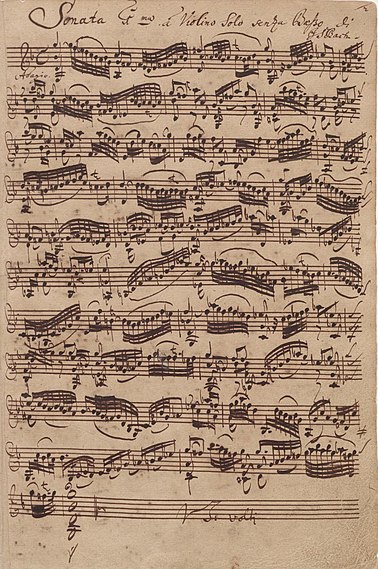
The Australian music journal Limelight Magazine has put together a set of clips that sums up Western classical music from the Middle Ages to the present. That's one of the great things about YouTube: once you get past the cat videos, there is a wealth of content, if you're willing to dig for it. In this case, Limelight has done the digging for us. They've collected 40 videos "to present a selective, chronological history of western classical music from the twelfth century to the modern age." It's a mix of concerts and recordings and documentaries, chosen with an ear on the recording quality.
Check out the series at Classical Music: a history according to YouTube.
Monday, May 9, 2011
The Library of Congress's record collection
There is an amazing place in Virginia, an old underground Federal Reserve repository where cash was stashed in case of a nuclear attack (although one wonders how much cash would be worth after being nuked: they should have been storing canned goods, water, and some of those Road Warrior vehicles if you ask me). Nowadays it's the home of six million items in the Library of Congress, specifically music and film. Housing it, maintaining it, and most of all sharing it, is not so easy.
Reporter Randy Lewis of the L.A. Times writes, "The breadth of the library's stock is impossible to summarize. But in addition to copies of every published recording registered for protection in recent decades with the U.S. Copyright Office, the library has acquired personal collections from classical music giants such as Leonard Bernstein, composer Aaron Copland and pianist Wanda Landowska, in some cases including never-released test pressings, as well as every 78 rpm disc recorded by jazz titan Jelly Roll Morton. It possesses tens of thousands of lacquer discs from NBC Radio, including the network's complete archive of World War II coverage; documentarian Tony Schwartz's trove of audio recordings from the streets of New York; and half a million LPs, among which are dozens of surf and hot-rod music-themed discs that Capitol Records issued in the '60s to capitalize on those crazes, including 'Hot Rod Hootenanny' by Mr. Gasser & the Weirdos, with cover art and songs co-written by fabled car designer Ed 'Big Daddy' Roth... The question is how many people will have access to it."
Read the whole story at Library of Congress builds the record collection of the century.
Reporter Randy Lewis of the L.A. Times writes, "The breadth of the library's stock is impossible to summarize. But in addition to copies of every published recording registered for protection in recent decades with the U.S. Copyright Office, the library has acquired personal collections from classical music giants such as Leonard Bernstein, composer Aaron Copland and pianist Wanda Landowska, in some cases including never-released test pressings, as well as every 78 rpm disc recorded by jazz titan Jelly Roll Morton. It possesses tens of thousands of lacquer discs from NBC Radio, including the network's complete archive of World War II coverage; documentarian Tony Schwartz's trove of audio recordings from the streets of New York; and half a million LPs, among which are dozens of surf and hot-rod music-themed discs that Capitol Records issued in the '60s to capitalize on those crazes, including 'Hot Rod Hootenanny' by Mr. Gasser & the Weirdos, with cover art and songs co-written by fabled car designer Ed 'Big Daddy' Roth... The question is how many people will have access to it."
Read the whole story at Library of Congress builds the record collection of the century.
Move Your Body
I just caught up with this, an initiative to get middle school kids up off their seats and dancing around, in aid of Michelle Obama's Let's Move! Initiative. With over 4 million views, a lot of people have enjoyed this already, and maybe as more kids watch it, they'll get the idea that movin' it is a lot better than sitting around lettin' it gain weight. (I will vouch for the fact that my cafeteria was nothing like this when I was that age.)
Sunday, May 8, 2011
Celebrities and their moms
Just a simple picture gallery for Mother's Day, courtesy of FlavorWire. (It took me a minute to sort out Divine and his mother, but at least now I know where he got his hair inspiration.)
Subscribe to:
Posts (Atom)
